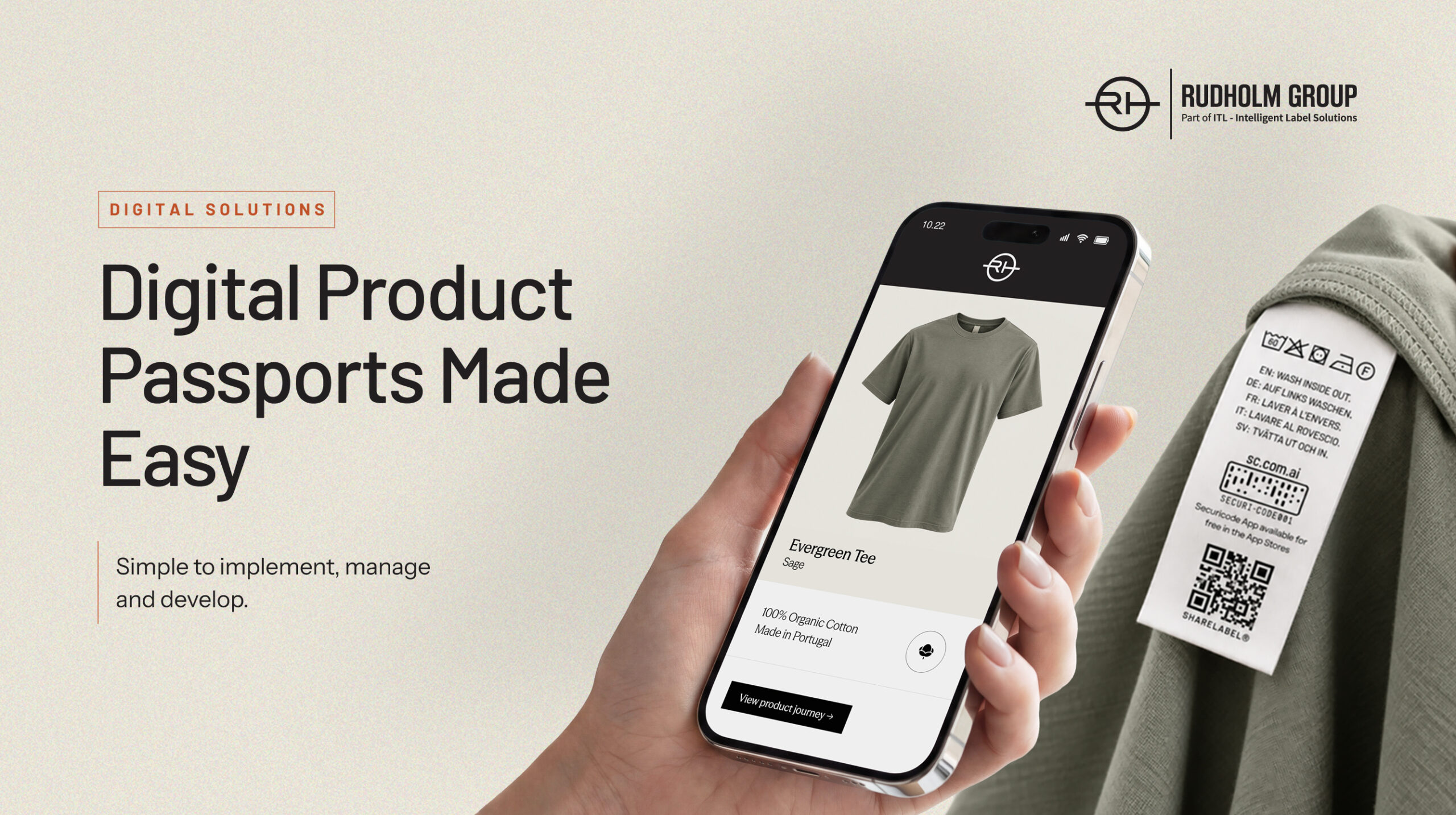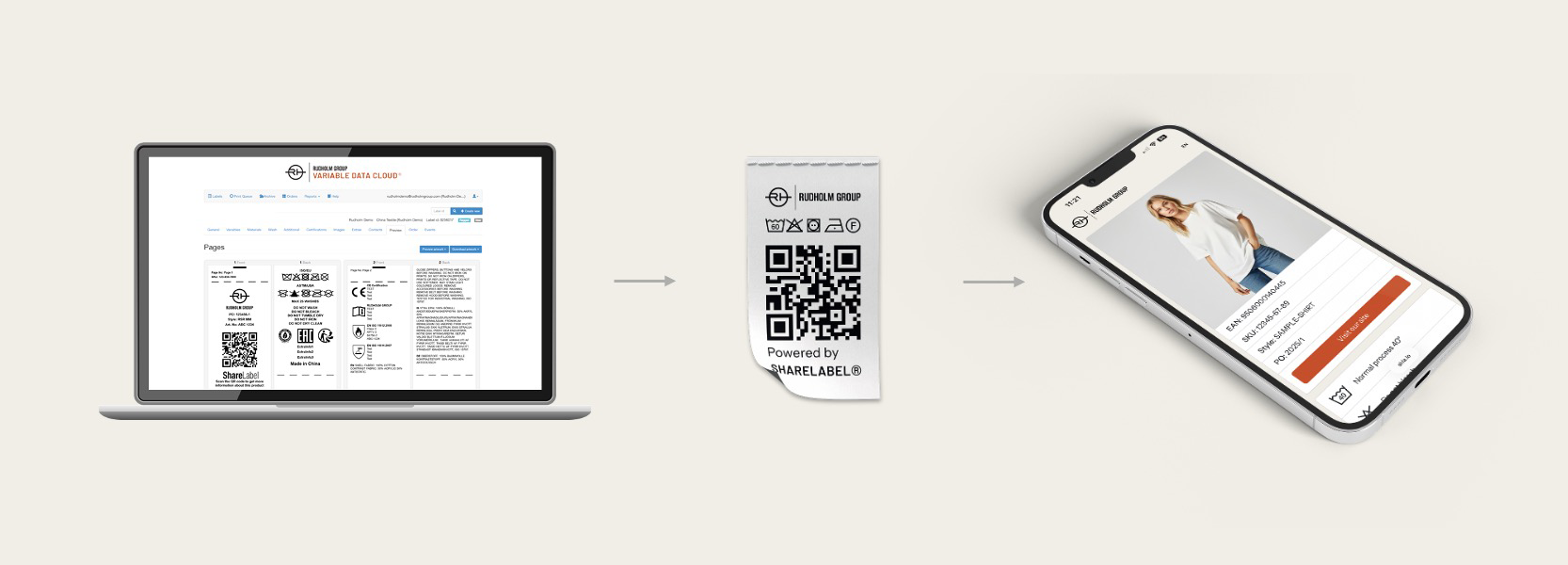
A key component of a Digital Product Passport is the data carrier – the technology that connects the physical product to its digital information.
In most cases, this connection is created using either QR codes or NFC chips.
Both technologies allow customers, retailers and supply chain partners to access product information instantly. However, they serve slightly different purposes depending on how the product is used.
You can read a full, detailed article of Digital Product Passports in our DPP guide.
QR Codes
QR codes are currently the most common technology used for Digital Product Passports.
They offer several advantages:
- Low cost
- Easy implementation
- Compatibility with all smartphones
- Simple scanning through the camera
Because they can easily be printed on care labels, they provide a practical way to connect garments to their digital passports.
At Rudholm Group, QR codes can be integrated directly into care labels as part of a connected workflow linking product data, physical identifiers and digital passports.
NFC Chips
NFC (Near Field Communication) works differently. Instead of scanning a code, users simply tap their smartphone against the product.
This technology is often used in:
- Premium garments
- Authentication systems
- Anti-counterfeiting solutions
Because NFC chips are embedded within the product, they are harder to replicate, making them a strong option for protecting products against counterfeiting.
As discussed in our article Fighting Brand Copies with Digital Product Passports, digital identities linked to NFC or QR technologies can help verify authenticity throughout the supply chain.
Which Technology Is Best?
In reality, many brands use both technologies.
QR codes provide accessibility and scalability, while NFC can offer additional security and interaction possibilities.
The right solution often depends on the product category, brand positioning and the level of interaction required with the Digital Product Passport.
Would you like to know more about DPP’s? Contact us today to get in touch with a sales member – or read more about our DPP solution, ShareLabel.