Understanding the concept of a Digital Product Passport becomes much easier when looking at a real-world example.
Let’s imagine a customer purchasing a jacket from a fashion brand that has implemented Digital Product Passports.
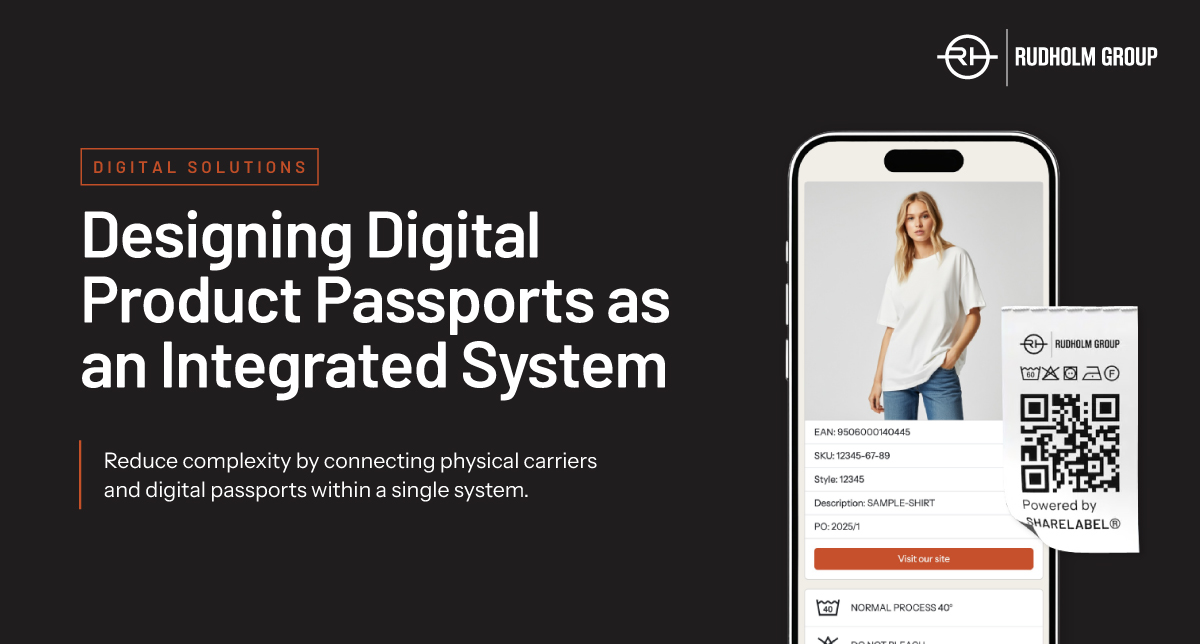
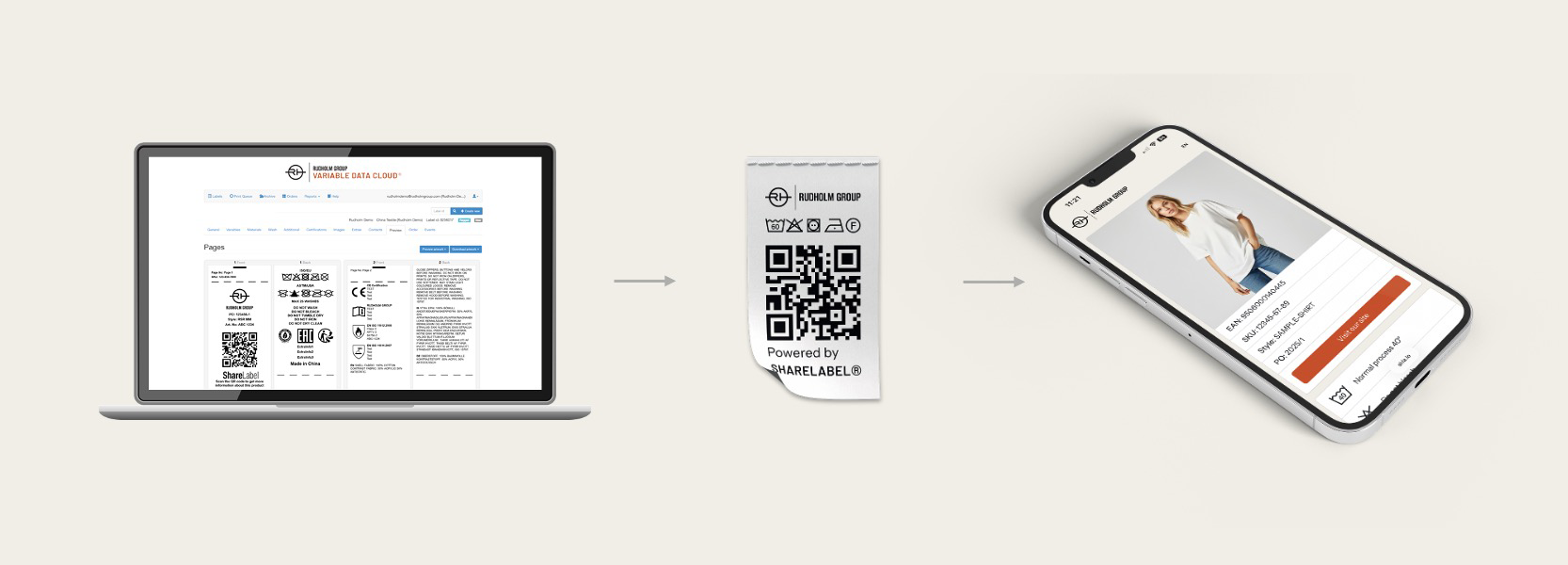
The jacket contains a care label with a small QR code. When the customer scans this code with their smartphone, they are instantly taken to a digital page showing the product’s passport.
This digital experience is powered by a platform such as ShareLabel®, developed by Rudholm Group.
Step 1: Scanning the Product
The customer scans the QR code printed on the garment’s care label.
This code links the product to a digital platform that stores and manages the product’s information.
Each garment receives its own unique digital identity, allowing the product to be individually identified and verified.
Step 2: Viewing Product Information
Once scanned, the customer can access information such as:
- product name and image
- material composition
- country of origin
- care instructions
- sustainability information
Because this information is digital, it can be updated over time as product data evolves or new requirements are introduced.
As described in our article on digital garment identity: Digital Identity of Your Garment – ShareLabel® Episode 01, a digital passport can also include storytelling elements such as videos, images or brand information.
Step 3: Supporting the Product Lifecycle
Beyond the purchase moment, the Digital Product Passport can continues to provide value throughout the garment’s lifecycle.
For example, it may include:
- repair instructions
- recycling guidance
- resale or rental information
- authentication verification
This supports the broader shift towards circular fashion and more transparent supply chains.
You can explore how Digital Product Passports support circularity in fashion in our article ShareLabel®: Enabling Digital Product Passports for Seamless Circularity in Fashion.
Want to know more about our DPP solution? Contact us today to get in touch with a sales member.