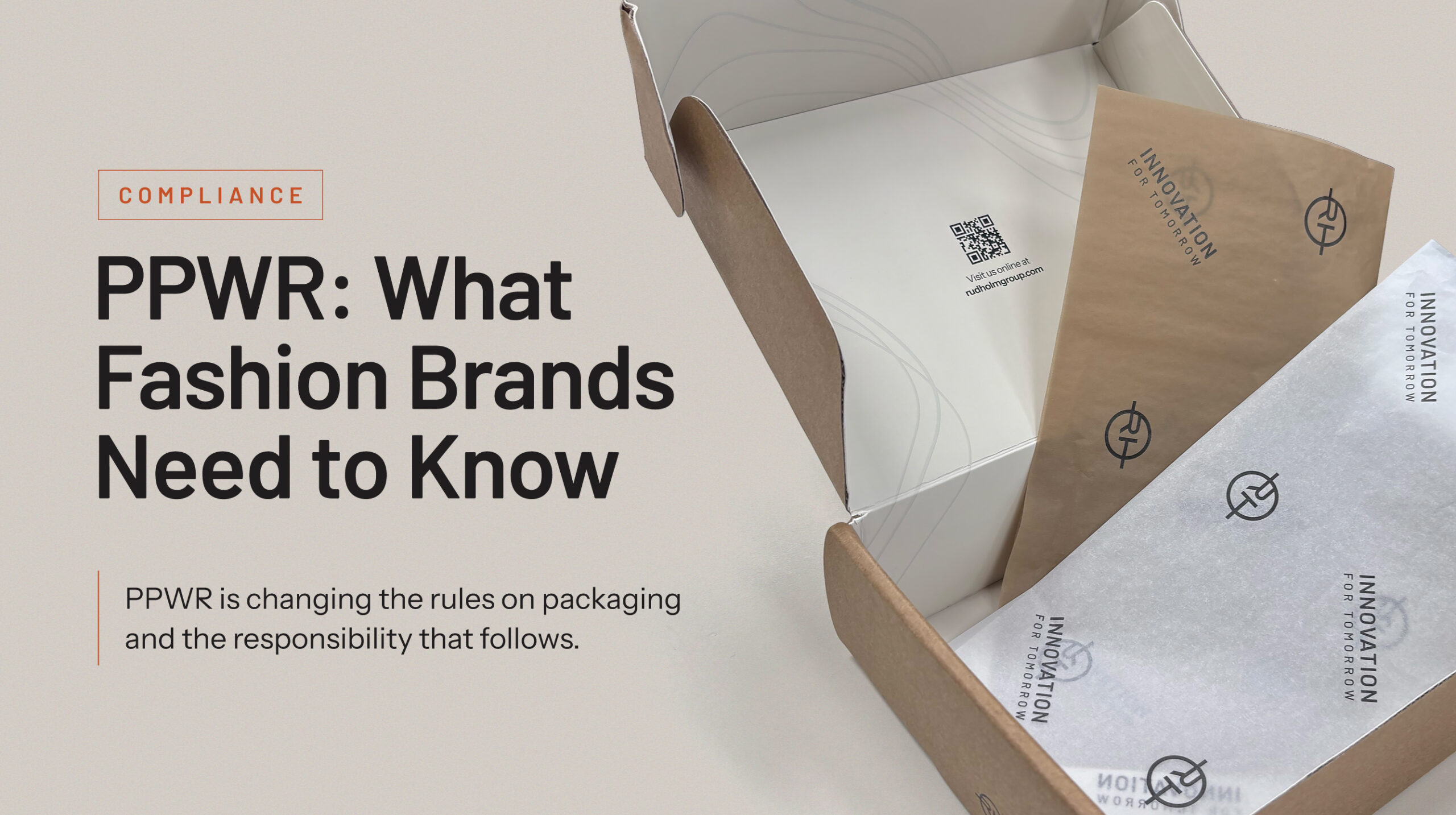
The EU’s Packaging and Packaging Waste Regulation (PPWR) is often described as a packaging or sustainability regulation.
In reality, it signals something broader.
PPWR changes how packaging decisions are evaluated and managed over time. Packaging is no longer a background consideration. It becomes a visible part of a brand’s regulatory and operational responsibilities.
For fashion brands, that shift matters.
PPWR replaces the previous Packaging Directive and applies directly across all EU member states. Its aim is to reduce packaging waste, improve recyclability, and harmonise requirements across markets. Unlike a directive, there is far less room for national interpretation.
PPWR applies from August 2026, with requirements phasing in through 2030 and beyond. While some technical details are still being clarified, the direction is clear.
Packaging placed on the EU market must meet stricter expectations on design, recyclability, labelling, and minimisation.

Why PPWR feels different
The shift from a directive to a regulation matters.
For fashion brands operating across multiple EU markets, this reduces flexibility in how packaging rules are interpreted locally. Expectations around packaging design and performance are becoming more uniform, even if reporting and fees remain country-specific.
Packaging decisions therefore become harder to localise and harder to treat as market-specific exceptions.
Packaging is no longer invisible
Under PPWR, packaging becomes more accountable.
Weight, volume, material choice, empty space, and recyclability are assessed more explicitly. These factors now carry regulatory, operational, and reputational consequences.
This does not mean packaging must be stripped back indiscriminately. It means packaging needs intention, with defensible reasoning built into its design.
Why material changes alone won’t be enough
A common response to PPWR is to focus on materials:
- Increasing recycled content
- Removing components
- Substituting one material for another
Material choices matter, but PPWR goes further.
Recyclability assessments consider what happens after packaging is placed on the market. Packaging that is technically recyclable but difficult to collect or process at scale may not meet future requirements.
Similarly, adding recycled content without considering sourcing, verification, and long-term availability can introduce new risks rather than reducing them.
Where design and compliance now overlap
Under PPWR, packaging design decisions directly influence compliance outcomes, including recyclability classification, labelling, minimisation, and extended producer responsibility.
As a result, packaging decisions can no longer sit within a single team. Design, sustainability, compliance, and supply chain perspectives all shape whether packaging remains defensible over time.
PPWR does not remove creative freedom, but it does require creative decisions to be informed.

A shift in mindset
PPWR reflects a broader expectation that brands understand and take responsibility for the packaging they place on the market.
For fashion brands, this is not just a regulatory update. It represents a shift in how packaging decisions are made, documented, and defended over time.
For readers looking for deeper guidance, including timelines and practical implications, our compliance portal provides more detailed coverage of PPWR and related regulations.
Request access to the compliance portal here or get in touch with a sales member to learn more about our products.