There is a lot for fashion and apparel brands to consider when preparing for Digital Product Passports.
Getting the right product data together is part of it. That data then needs to be connected to the right physical product and managed across suppliers, factories and systems.
And that process needs to remain manageable once the Digital Product Passport is live.
So when looking at different approaches to DPP, it makes sense to think beyond implementation. How easy will it be to manage over time, and what more could you do with it in the future?
1. Make Digital Product Passport implementation simpler
For fashion brands operating across products, suppliers and markets, several things need to come together:
- Product data needs to be collected and structured.
- A unique digital identifier needs to connect that data to the right product.
- The identifier needs to be applied to the physical product.
- The right information needs to be available through the Digital Product Passport.
Managing these elements across separate suppliers and systems can quickly add complexity.
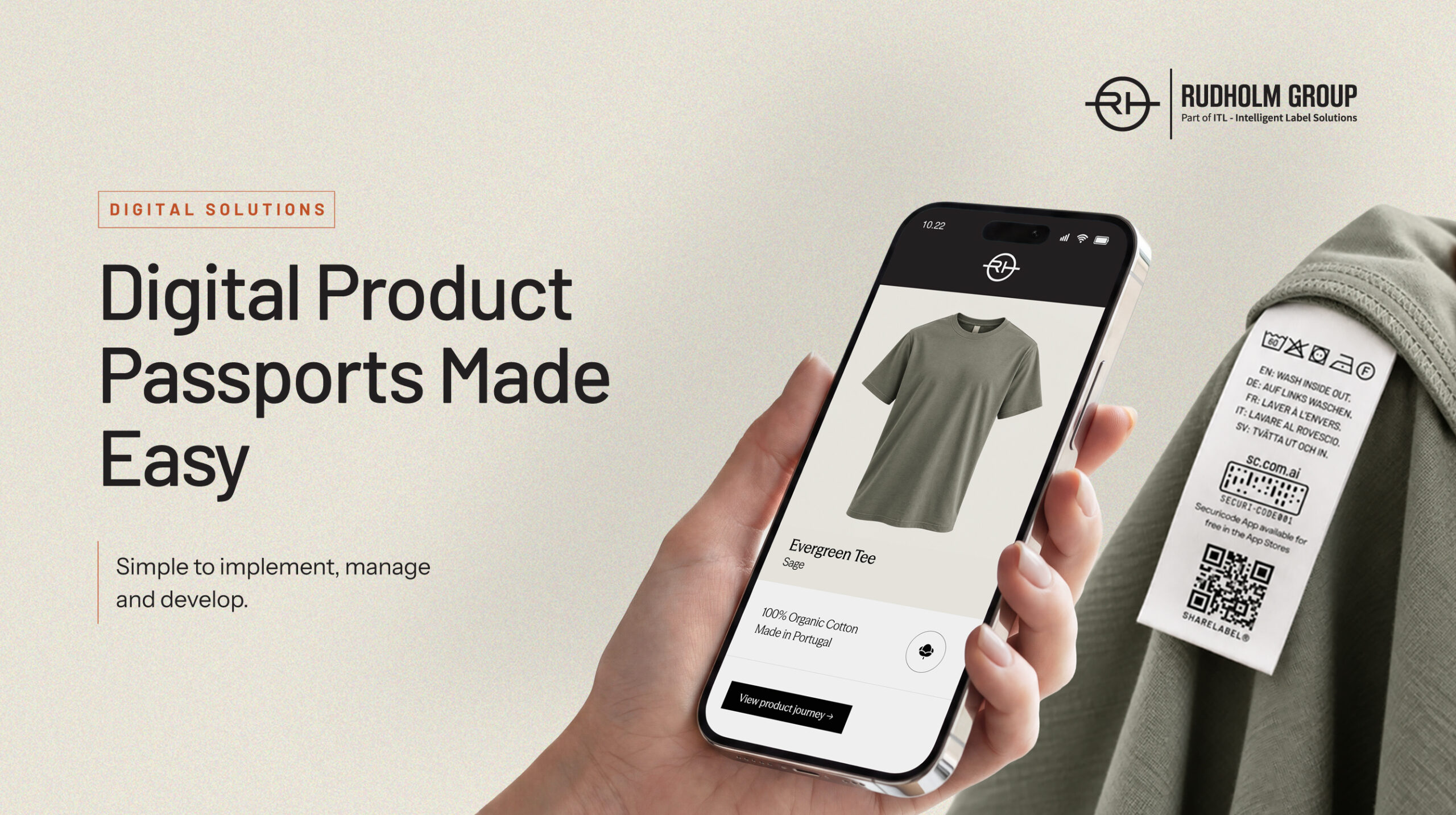
Rudholm brings them together. Variable Data Cloud® manages the product data, the unique identifier is applied through the care label, and ShareLabel® delivers the Digital Product Passport.
For brands, that means one connected workflow with fewer separate processes to coordinate across the supply chain.
2. Keep DPP manageable over time
Products, data and requirements change. New styles are introduced, information is updated and suppliers need to work with the process.
So, how easy will a DPP be to manage over time?
Connecting DPPs with existing product data and labelling processes helps avoid adding another disconnected system.
ShareLabel® can integrate with existing PLM and PIM systems, keeping DPP information connected to established product data workflows.
For brands, this means DPP can remain part of the way product information is already managed, rather than becoming another separate process to maintain.
3. Do more with your DPP
Compliance may be the reason for introducing a Digital Product Passport, but the same connection can be used for more.
Once a product is connected to digital information, brands can build on what customers can access. This could include more information about the product, its materials, certifications and care, as well as new digital experiences.
With ShareLabel®, brands can build on their DPP over time rather than limiting it to the initial compliance requirement.
There are opportunities beyond DPP too. The same care label can support other requirements. Rudholm’s Variable Data Cloud®, ShareLabel® and SecuriCode can bring compliant care information, Digital Product Passports and product authentication together through the care label.
Making DPP easier
The right approach should reduce the complexity of getting DPP up and running, keep it manageable as products and information change, and give brands the flexibility to do more with it over time.
That is the thinking behind ShareLabel®.
By connecting product data, physical labels and Digital Product Passport delivery, Rudholm helps brands manage DPP as part of a connected process rather than another standalone system.
Find out more about ShareLabel® and Rudholm’s approach to Digital Product Passports.