As Digital Product Passport (DPP) requirements move closer to implementation, most discussions focus on what information needs to be included.
Materials. Origin. Suppliers. Sustainability data. End-of-life guidance.
All of this is essential. But in practice, the bigger challenge isn’t defining the requirements.
It’s managing Digital Product Passports when responsibility is divided across multiple suppliers and systems.
That complexity is often underestimated at the start of a DPP project.
Where Complexity Enters DPP Projects
Many DPP initiatives are structured around separate responsibilities:
- Product data is managed in one system
- One supplier produces the physical carrier
- Another system manages the Digital Product Passport
At first glance, separating these responsibilities seems practical. But product data, the physical carrier and the Digital Product Passport are closely connected.
When they’re managed separately, control becomes harder to maintain. This is where complexity starts to build.
Where DPP Becomes Harder to Manage
When identifiers, labels and Digital Product Passports are managed across separate systems, brands face additional coordination and oversight.
In practice, this can include:
- Additional manual processes when product information is updated
- Greater effort to maintain consistency across markets, languages or product lines
- More complex ownership and escalation when information needs to be corrected
- Ongoing work as requirements and responsibilities change
These issues are not always visible during early pilots, but they become more relevant as DPP initiatives move into full production.
Designing DPP as One Connected System
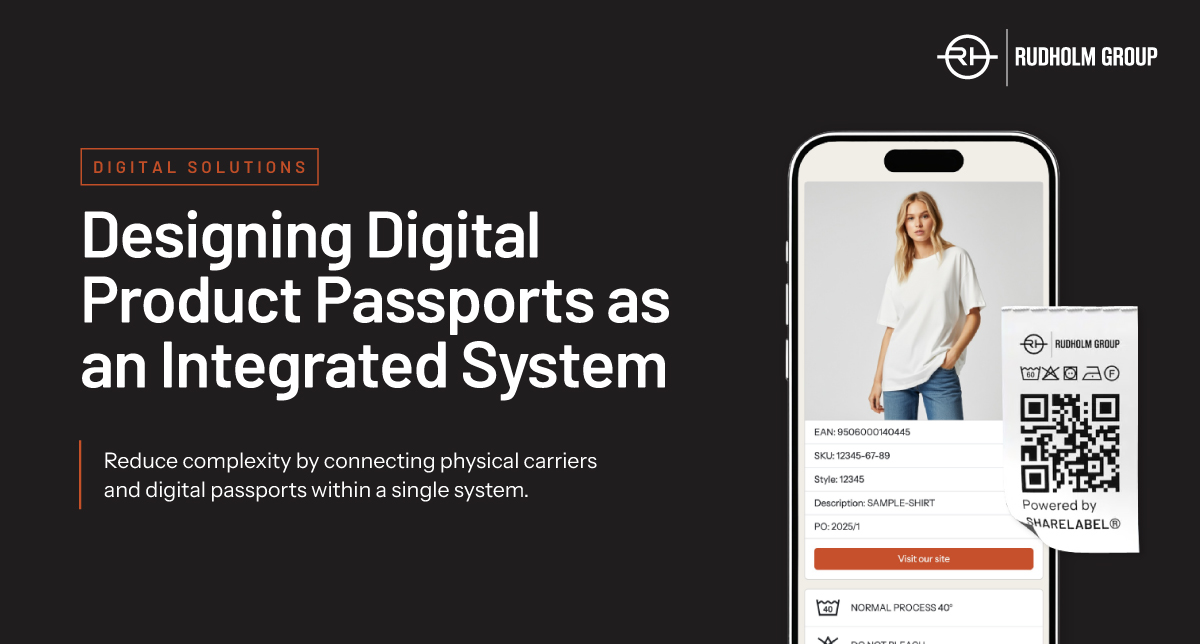
A more resilient approach is to treat the physical carrier and the Digital Product Passport as one integrated process, created from the same data source.
Because we operate a vertical setup that manages both label production and digital delivery, this integration happens within one accountable system rather than across multiple suppliers.
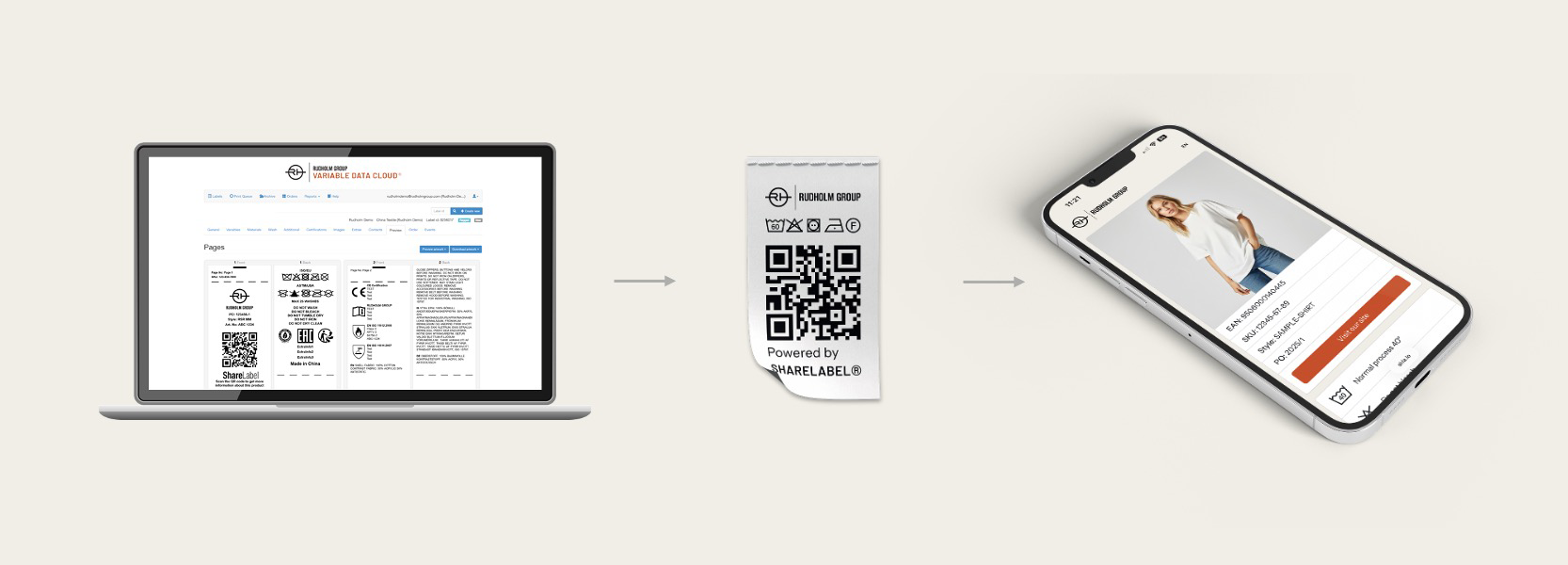
This is enabled through Variable Data Cloud®, our platform for care label creation with automated layouts and translations. A unique identifier is created once and used to generate the Digital Product Passport.
Within this vertically integrated setup:
- Structured product data is captured and managed at source
- A unique product identifier is created once
- The physical carrier (care label with QR code) is generated during label production
- The Digital Product Passport is automatically generated using that same identifier
The Digital Product Passport is then managed through ShareLabel®, where brands can maintain product, compliance and sustainability information as it changes. An integrated system connecting data, labels and digital delivery reduces the need to rebuild workflows. It shifts DPP from a one-off compliance task to a scalable system built for long-term control.
A Practical Perspective
How responsibility is divided between suppliers, and when the physical carrier and the Digital Product Passport are connected, will determine how manageable the system is in production.
Establishing that connection at label creation within a single vertically integrated process reduces fragmentation, clarifies accountability and simplifies long-term ownership.
When data, physical labels and digital delivery are managed within one vertically integrated system, accountability is clearer and long-term control becomes far easier to maintain.
If you’re reviewing your DPP approach, it’s worth considering where that responsibility sits.
Ready to simplify your DPP approach? Contact us today to get in touch with our sales team.